

5 June, 2026
Falls remain one of the leading causes of injury among older adults, with night-time falls presenting a particularly significant challenge for families, carers and care providers without the right fall prevention technology.
Many older people wake during the night to use the bathroom, reposition themselves, or simply due to changes in sleep patterns. During these moments, reduced lighting, fatigue, dizziness and confusion can all contribute to an increased risk of falling.
As healthcare providers look for more effective ways to support vulnerable adults, fall prevention at night is emerging as an important tool for improving safety while maintaining independence.
Research consistently shows that a significant proportion of falls occur during night-time hours.
Studies suggest that around 20% of falls happen at night, often during periods when individuals are transitioning from lying down to standing up.
Several factors contribute to this increased risk:
For care homes, these risks can be even greater because staffing levels are often lower overnight compared to daytime hours.
Night-time falls are one of the most difficult incidents for care homes to manage.
Residents may wake unexpectedly and attempt to mobilise independently without assistance. Even when care plans are in place, it can be impossible for staff to be present immediately every time someone gets out of bed.
The consequences of falls can be serious and may include:
Preventing falls before they happen is therefore a major priority across the care sector.
Many falls occur within the first few moments after a person wakes up.
During this period, the body may still be adjusting from a resting position. Blood pressure can temporarily drop, muscles may not be fully activated and individuals may feel disoriented.
Creating a short delay before standing can significantly improve safety.
This is where intelligent fall prevention technology can make a real difference.
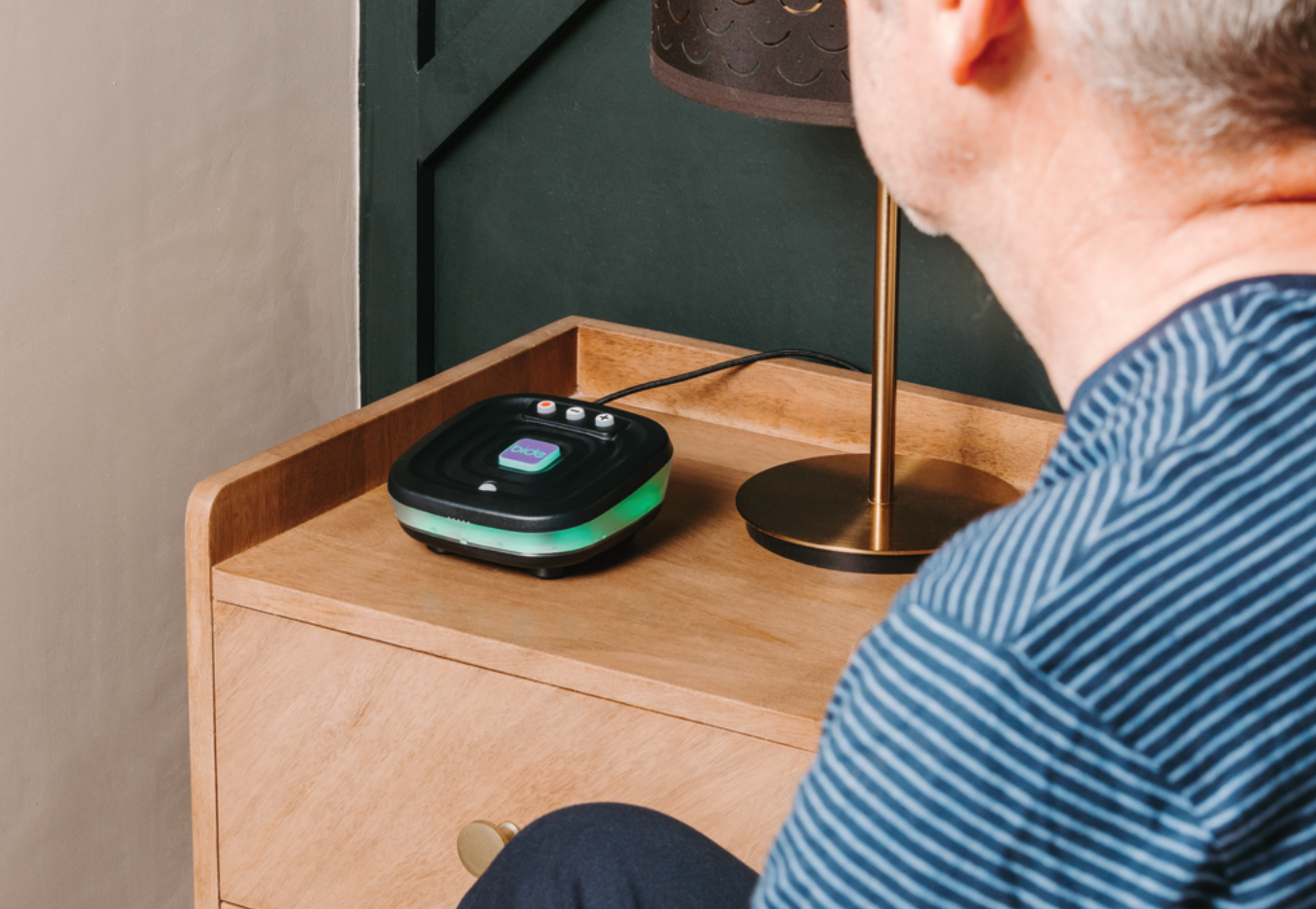
Bide has been developed specifically to support older adults who may be at risk of falling during the night.
Unlike traditional monitoring systems that simply react after an incident has occurred, Bide aims to prevent falls before they happen.
Using discreet motion and light sensors, Bide detects when an individual wakes up or sits up in bed.
When movement is detected, the system automatically plays personalised voice messages recorded by loved ones, carers, or family members.
These reassuring messages can remind the individual to:
This simple intervention encourages safer decision-making during vulnerable moments.
One of the most powerful aspects of Bide is its use of familiar voices.
Research has shown that familiar and reassuring prompts can help improve orientation and reduce anxiety, particularly for older adults who may experience confusion at night.
Hearing the voice of a loved one can provide comfort while reinforcing important safety messages.
The system can store up to five personalised recordings, allowing instructions to be tailored to each person’s needs.
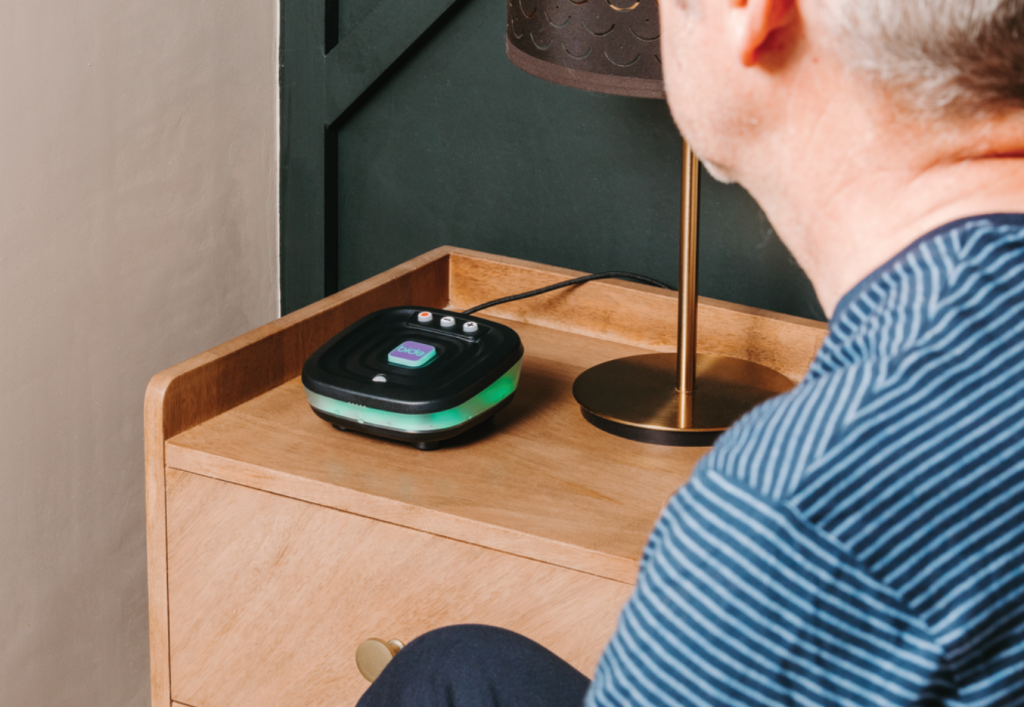
In addition to voice guidance, Bide provides automatic room illumination when activated.
This helps users:
The integrated traffic light-style system also acts as a visual cue, encouraging users to pause briefly before standing.
This allows time for:
As the population ages, the demand for effective fall prevention technology will continue to grow.
Solutions that combine intelligent sensing, personalised support and environmental guidance are helping shift the focus from reacting to falls to preventing them altogether.
By addressing the critical moments when people first wake up and prepare to stand, technologies such as Bide can help create safer environments, reduce injuries and support independence for longer.